

Bitcoin Approaches Christmas 2025: A Fragile Yet Intriguing Landscape
As Christmas 2025 approaches, Bitcoin finds itself in a precarious yet fascinating position. The price hovers around the $93,000 mark, following several weeks of pressure. Four crucial charts illustrate a market deep into its correction phase, but still devoid of a distinct bullish trigger. Ongoing dynamics reveal three significant forces at play: recent buyers are nursing substantial losses, new whale investors are capitulating, and macroeconomic conditions continue to exert influence over Bitcoin’s price trajectory.
Short-Term Bitcoin Holders are in Deep Pain
The first chart examines the realized profit and loss among short-term holders (STHs). This group is composed of Bitcoin purchased within the last few months, and their “realized price” represents their average cost basis.
Earlier in 2025, STHs enjoyed strong gains, with an average profit margin of 15–20% as Bitcoin surged. However, the situation has since reversed. Currently, Bitcoin trades below the STH realized price, leaving this group with losses averaging around -10%. The accompanying histogram reflects a deepening red, marking one of the most significant loss periods of 2025.
Implications of Heavy Losses
This shift has notable consequences. In the short term, underwater holders may sell at any hint of a price bounce, aiming to break even. This selling pressure caps potential rallies close to their entry zone. However, deep loss pockets often appear later in corrections, indicating that weak hands have already faced substantial damage. Over time, this diminished selling power among distressed traders could signal a stabilization.
Historically, significant turning points often arise when prices reclaim the STH realized price from below, indicating that forced selling has largely concluded and new demand begins to absorb supply. Until this reclamation occurs, cautious trading strategies remain advisable.
New Bitcoin Whales Just Surrendered
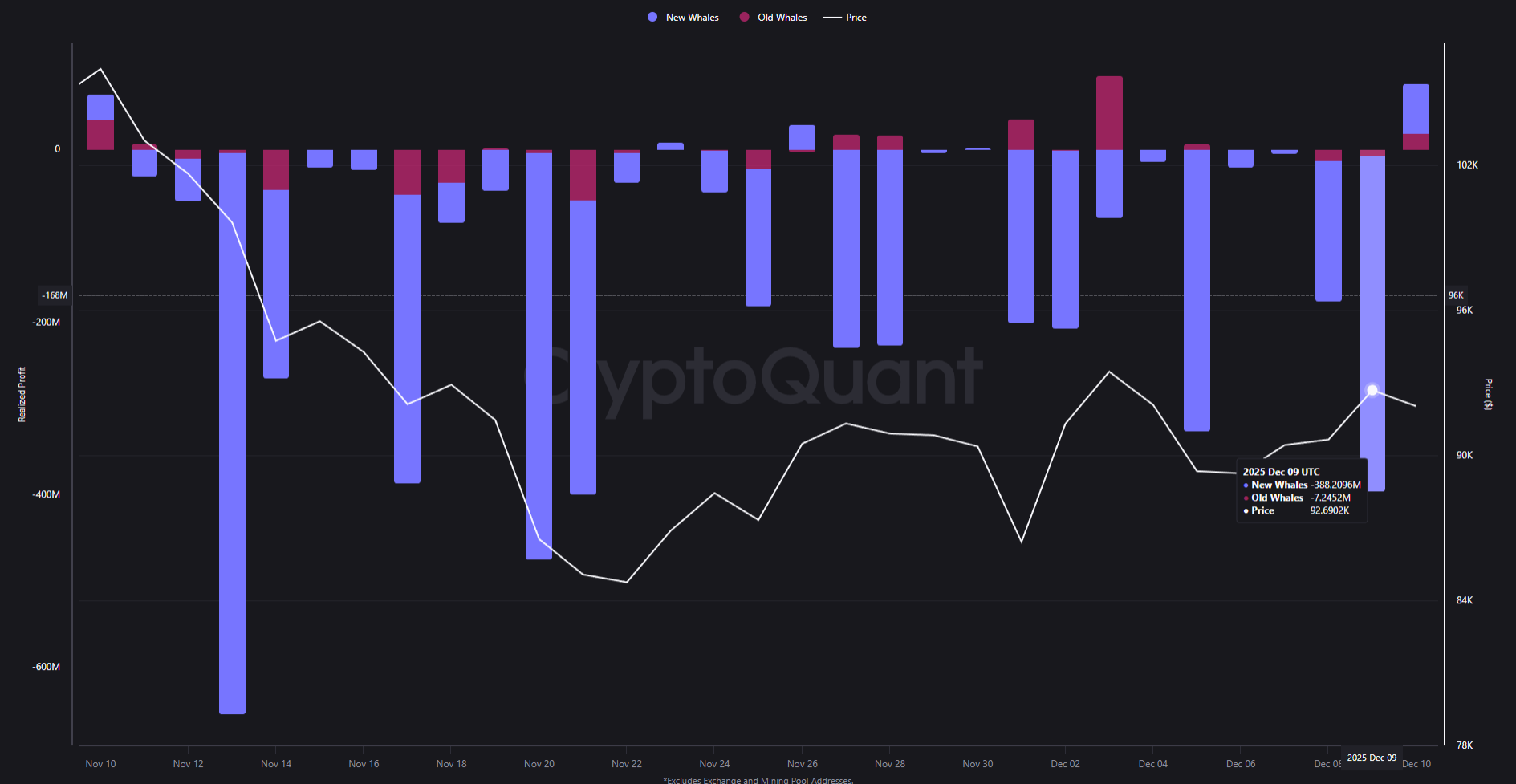
The second chart analyzes realized profit and loss across different whale cohorts, distinguishing between “new whales” and “old whales.” New whales, having recently accumulated large holdings, realized approximately $386 million in losses in just one day. This marked a significant negative spike, while older whales exhibited less pronounced fluctuations in their realized profits and losses.
The Lifespan of New Whales
This behavior is typical for late correction stages. New whales often enter the market late and sometimes leverage their positions excessively. Consequently, when prices begin to decline, they tend to be the first to capitulate.
This capitulation, while detrimental in the short term, can offer structural benefits. As coins transition from weaker to stronger hands, the future sell-side pressure diminishes. Although bearish in the immediate term, this shift may enhance the market’s resilience as large sellers finish liquidating their positions.
Real Interest Rates Still Steer Bitcoin
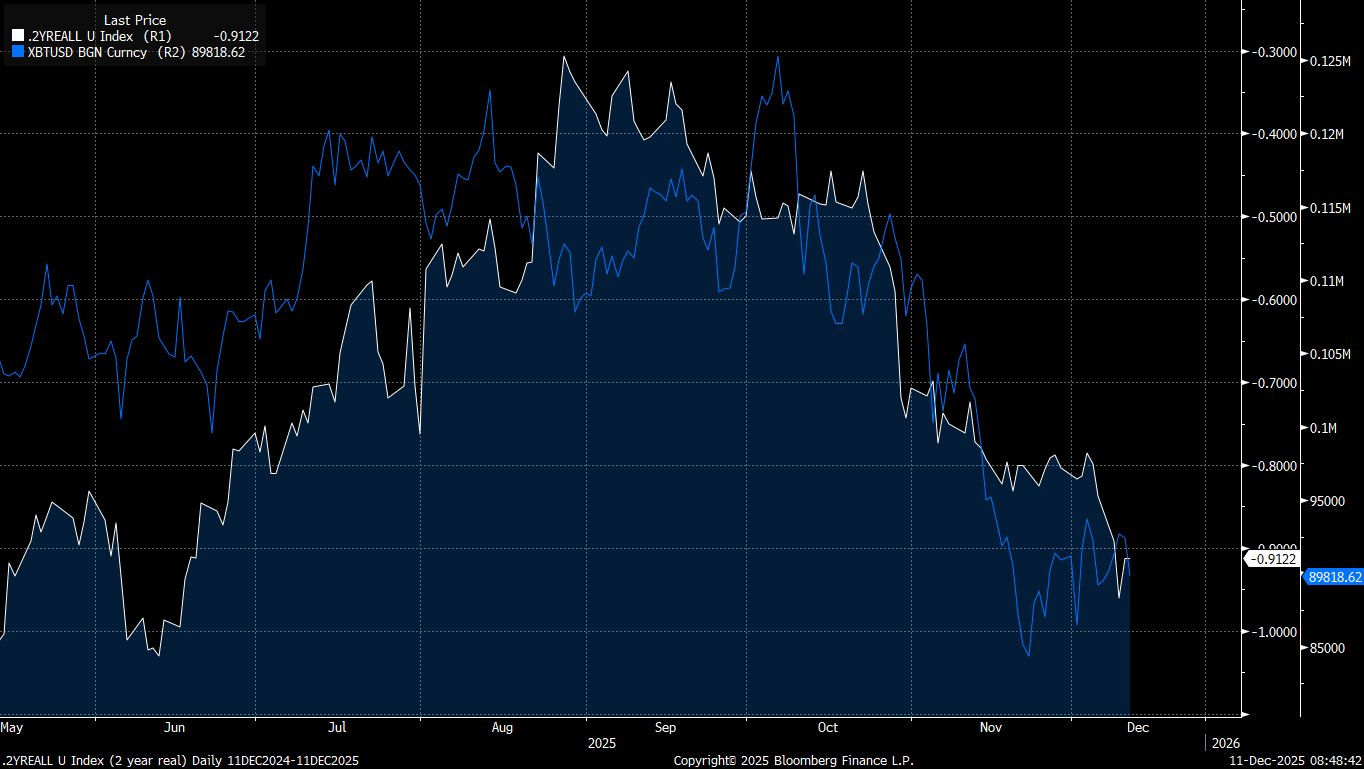
In the third chart, an overlay of Bitcoin with two-year US real yields (inverted) reveals how closely real yields track Bitcoin’s price movements throughout 2025. Real yields represent interest rates adjusted for inflation. As real yields fall, the inverted line rises, often leading to Bitcoin price increases.
Yet, since late summer, real yields have resumed their upward trajectory, resulting in a corresponding decline in Bitcoin’s value. This underscores the dominance of macro conditions over market sentiment.
Future Expectations
Despite speculation on Federal Reserve rate cuts, the market’s perception of real borrowing costs holds more sway than nominal rates. A sustainable new bullish phase for Bitcoin typically hinges on easier real conditions. Until such a shift is priced into the bond markets, Bitcoin rallies will likely encounter macroeconomic headwinds.
Spot Taker Buyers are Stepping Back In
The fourth chart focuses on the 90-day Spot Taker CVD across major exchanges, measuring the net volume of market orders crossing the spread. For weeks, the market exhibited a Taker Sell Dominant regime, as aggressive sellers flooded the market, aligning with Bitcoin’s price decline.
Recently, however, there has been a notable shift to Taker Buy Dominant, indicating a resurgence of aggressive buying activity across spot exchanges.
Emerging Trends
This early shift holds significance. Trend reversals often initiate with microstructure changes such as this. The return of aggressive buyers could indicate a stabilization in price action. One day of positive data is insufficient for definitive conclusions; however, a sustained uptick would confirm the re-entry of genuine demand, potentially absorbing supply from capitulating short-term holders and newly distressed whales.
What It All Means For Bitcoin Price Heading Into Christmas
Collectively, these four charts illustrate a market in the midst of a late-stage correction, rather than a new bull market. Short-term holders and new whales are grappling with significant losses, continuing to exert selling pressure. Moreover, macroeconomic factors linked to real yields continue to shape market sentiment and price movements.
Despite these challenges, glimmers of potential recovery are beginning to emerge. The capitulation of new whale investors could clean up Bitcoin’s holder base, while new spot buyers entering the market may help slow downside momentum.
As Bitcoin hovers around the $90,000 mark, the road ahead looks largely range-bound with a bearish tilt. Price declines into the mid or high-$80,000s remain plausible if real yields exert sustained pressure. A discernible bullish signal would require three key indicators to align: the price reclaiming the short-term holders’ realized price, a decrease in two-year real yields, and confirmation of continued Taker Buy dominance.
Until such alignments manifest, traders face a landscape characterized by price fluctuations heavily influenced by macroeconomic data and the sentiments of trapped holders. In this context, long-term investors might find strategic opportunities rather than compelling reasons to make aggressive positions.